
An Exemplary Wedding Costume
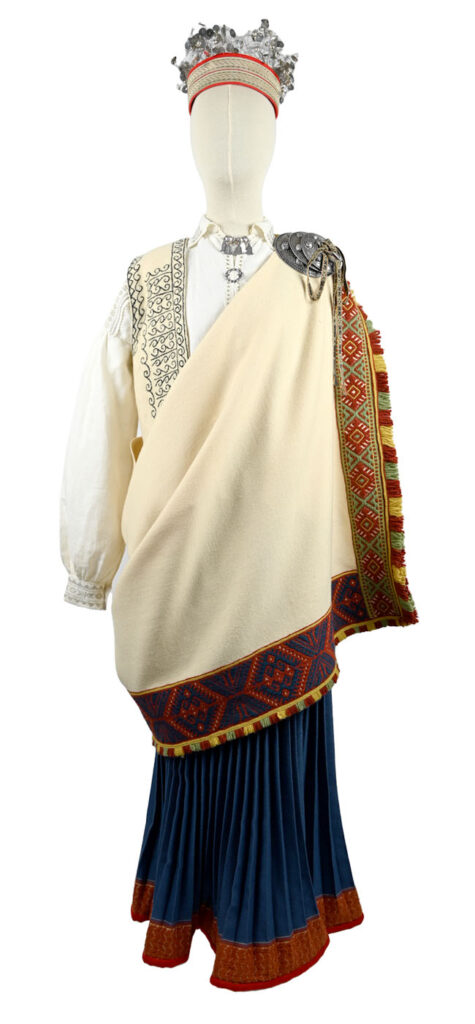
Home > In Exile > Becoming a master folk costume maker > An Exemplary Wedding Costume An Exemplary Wedding Costume Nīca folk costume. Made by Erna Puriņa-Jansone (1920–2017), USA, 1960s. The folk costume is a replica of an 18th-century Nīca bridal costume. It was made by the skilled craftswoman Erna Puriņa-Jansone, who had graduated from the Liepāja School of Applied Arts in Latvia. In 2015 Erna Puriņa-Jansone prepared and published the book “Sienas segu un spilvenu meti latviskā stilā / Latvian Style Wall Hangings and Pillow Designs”. The beautiful and unusual bridal costume from Nīca has taken part in several folk costume shows at Latvian Song Festivals in Milwaukee and Chicago, where in 2002 it was featured as the show’s closer. Donated by Māra Blats. From the collection of the Latvians Abroad Museum and Research Centre (LP2023.109). A model wearing the folk costume made by Erna Puriņa-Jansone, the Latvian Song Festival in Chicago, 2002. A still from the video of the show, filmed by LATTV, a Latvian video studio in Canada.
A Folk Costume Made by a Master Tailor
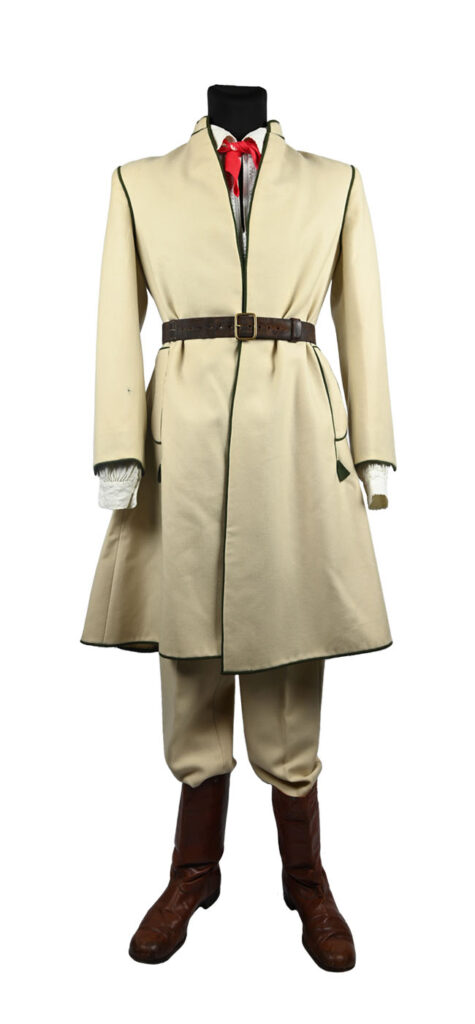
Home > In Exile > Becoming a master folk costume maker > A Folk Costume Made by a Master Tailor A Folk Costume Made by a Master Tailor Kuldīga man’s folk costume. Made by Rasma Spalvainis and Bruno Sauls in 1959, UK. The folk costume was made for the Latvian folk dance group “Līga” in Cardiff, Wales, by Leeds-based master tailor Bruno Sauls. Sauls modelled the folk costume on those in the book “Novadu tērpi” [Regional folk costumes] by E. Kivicka and A. Karnups. Sauls travelled all the way to Cardiff to take the measurements of every dancer in order to ensure well-fitting folk costumes. The shirt for this folk costume was sewn by handicrafter Rasma Spalvainis. Donated by the “Senā Klēts” Folk Costume Centre. From the collection of the Latvians Abroad Museum and Research Centre (LP2018.1580). The Cardiff-based Latvian folk dance group “Līga” at a folk festival in Cork, Ireland in 1961. The dancers are wearing Kuldīga folk costumes made by tailor Bruno Sauls. Donated by Rita Jefimova. From the collection of the Latvians Abroad Museum and Research Centre.
Homemade Jewellery From Copper
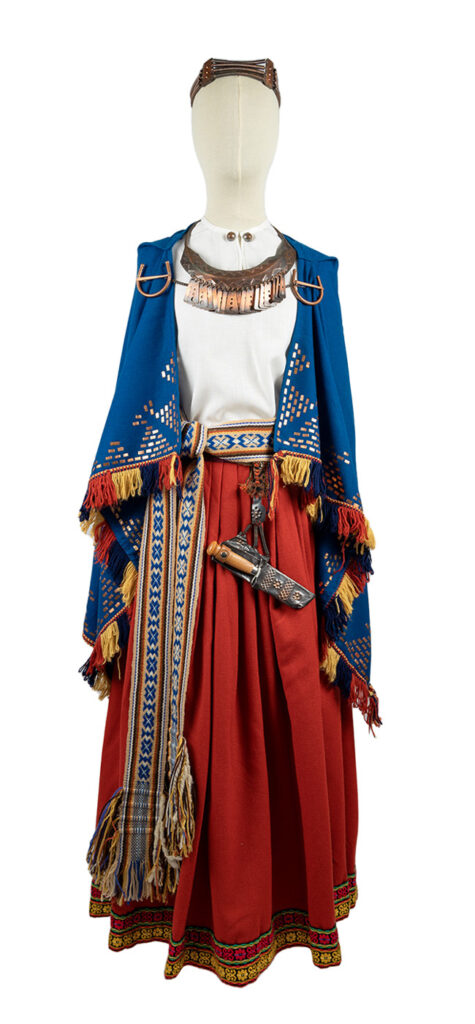
Home > In Exile > Becoming a master folk costume maker > Folk costumes made by folk dance groups >Homemade Jewellery From Copper Homemade Jewellery From Copper Reproduction of an archaeological costume. Made in Canberra, Australia, in the 1970s. This reproduction of a 12th-century costume was made by members of the “Sprigulītis” folk dance ensemble in Canberra. In the run-up to the opening of the Sydney Opera House, various ethnic groups living in Australia were invited to enter a competition to perform at this historic event. Māra Siksna recalls: “Knowing that we would be competing with the lively dancers of the southern nations, and the sumptuous silk and gold costumes of the eastern countries, director Skaidrīte Darius decided to highlight the long history of our dances and rituals. So was born the reckless idea of imitating a 12th-century Latgalian costume for four pairs of dancers.”The archaeological costume reproductions and jewellery were made by the dancers themselves in the dining room of Māra’s house, using the more readily available copper instead of bronze. For example, the copper for the bracelets came from car batteries, while the penannular brooches were made from copper pipes bought from a plumbing shop. The costumes were made by learning and mastering new metalworking and handicraft techniques, as well as adapting them to the needs of the stage. This costume has been worn on many stages, including on the “Saules josta” folk dance ensemble’s tour to America, Canada, England, Germany and Sweden in 1976. Donated by Māra Siksna and Skaidrīte Darius. From the collection of the Latvians Abroad Museum and Research Centre (LP2023.6.9-12, LP2023.112). Siksna family in Canberra, Australia, 1973. Donated by Māra Siksna. From the collection of the Latvians Abroad Museum and Research Centre. Homemade Jewellery From Copper Playing Previous Song Play Pause Next Song /
Parts From a Water Boiler old
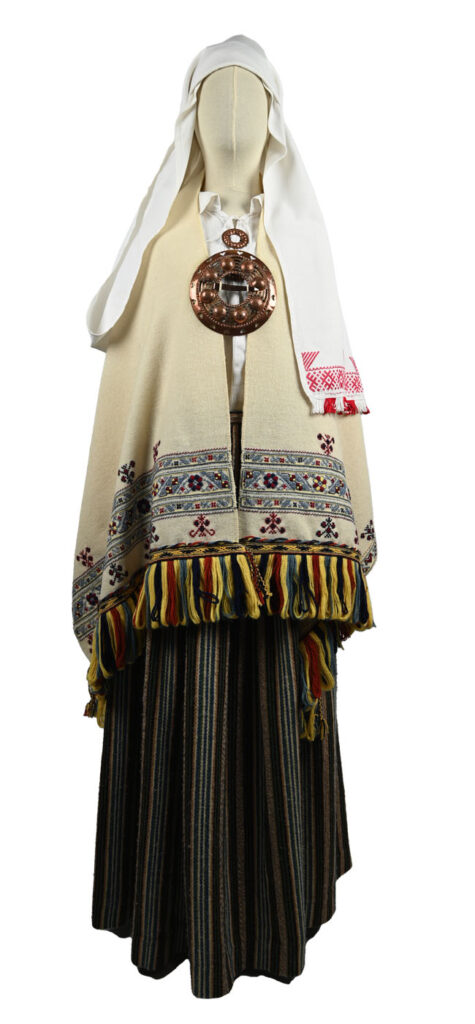
Parts From a Water Boiler Dignāja folk costume. Made by Rita Jefimova around 1980 in Great Britain. The Dignāja folk costume was made in the Latvian arts and craft group in Leeds in preparation for the English Latvian song days. Rita Jefimova made not only the Dignāja skirt, shirt, shawl and head-wrap, but also the brooches – they were made from copper water boiler parts. Rita remembers: “The craziest part was when we had to weave the skirt because we couldn’t get the right materials. I have a Dignāja skirt that I can hardly wear because it is so thick and heavy. I turned out more like upholstery fabric – we wove with what we had.” Donated by Rita Jefimova. From the collection of the Latvians Abroad Museum (LP2016.340). Rita Jefimova in the Dignāja folk costume in the estate garden of the Latvian centre “Abrene” in France; Easter 1990. Donated by Rita Jefimova. Parts From a Water Boiler Playing Previous Song Play Pause Next Song /
Collaborative Work by Master Artisans
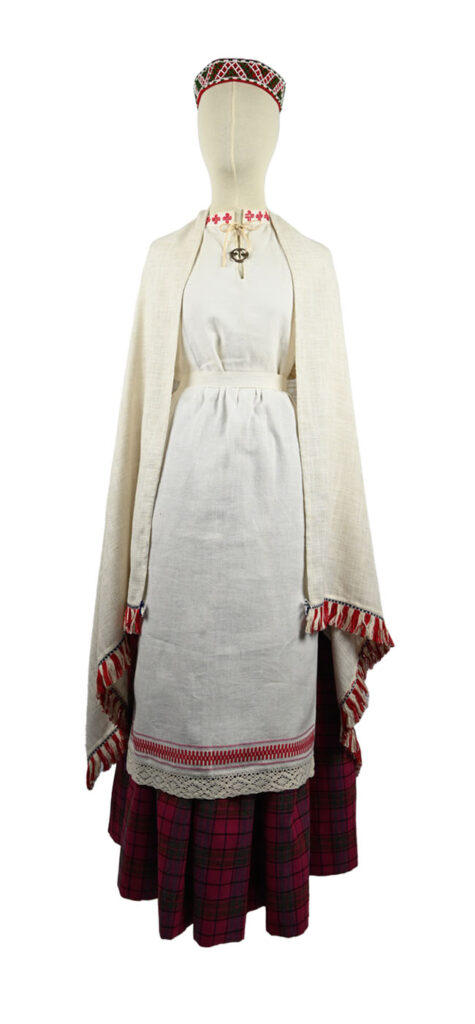
Home > In Exile > Becoming a master folk costume maker > Latvian Arts and Crafts Group in Leeds > Collaborative Work by Master Artisans Collaborative Work by Master Artisans Mērdzene folk costume. Made by Ērika Vīlipsone and Ilga Mieriņa in 1972, in the UK. This northern Latgale folk costume is the joint work of two members of the Latvian arts and craft group in Leeds. The fabric for the skirt was bought in a fabric shop in England. Ērika Vīlipsone, who wore the folk costume, made the shirt and maiden’s headdress; Ilga Mieriņa made the woven belt, the matron’s headdress pieces, and the apron and socks. The silver brooch was made by Margonis Bude. Donated by the “Senā Klēts” Folk Costume Centre. From the collection of the Latvians Abroad Museum and Research Centre (LP2018.1572). Ilga Mieriņa (left) and Ērika Vīlipsone and of the Latvian arts and craft group in Leeds; 1989. Donated by Rita Jefimova. From the collection of the Latvians Abroad Museum and Research Centre.