
Never Worn, Yet It’s Travelled the World
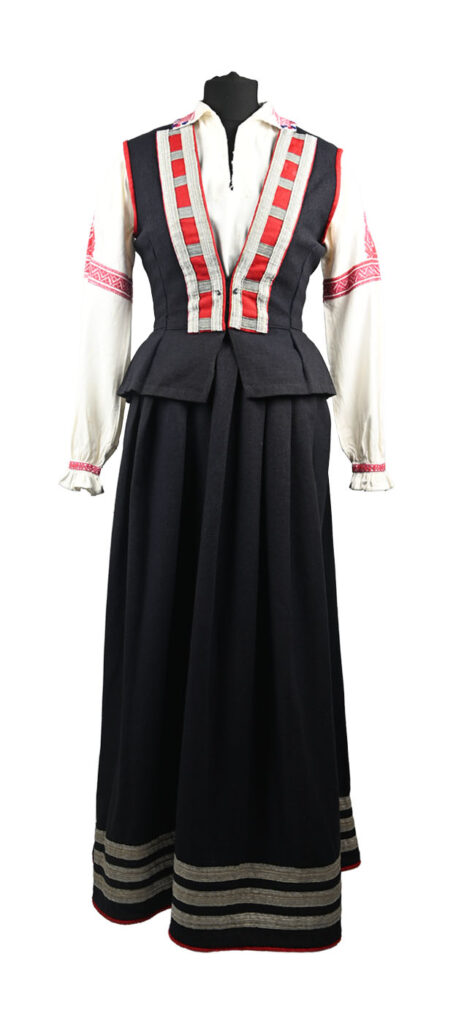
Home > In Refugee Camps > Making folk costumes in refugee camps > Never Worn, Yet It’s Travelled the World Never Worn, Yet It’s Travelled the World Rucava folk costume. Made by Emma Kušķe (née Ozoliņa, 1912-?) in the late 1940s in Germany. The folk costume was made in a refugee camp either in Itzehoe or Eutin, Germany. The Rucava skirt was made from a dyed army blanket. It was made by Emma Kušķe for her daughter Ausma to wear while singing in the choir at the Latvian song festival in Lübeck. In 1948 the folk costume was taken along to New Zealand, then to Hong Kong and Australia. Ausma never wore the folk costume. Donated by Ausma Taylor; from the collection of the Latvians Abroad Museum and Research Centre (LP2015.227). Vitauts, Elza and Daumants Hazners at Midsummer’s Eve celebration in Augstdorf, Germany, 1955. Donated by Daumants Hazners. From the collection of the Latvians Abroad Museum and Research Centre.
From Rucava to Meerbeck and “Priedaine”
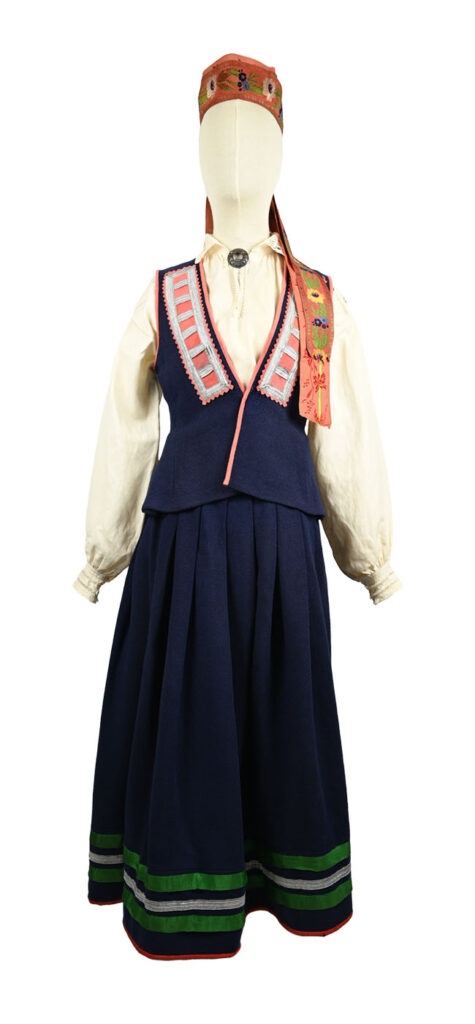
Home > In Refugee Camps > Making folk costumes in refugee camps > From Rucava to Meerbeck and “Priedaine” From Rucava to Meerbeck and “Priedaine” Rucava folk costume. Made by Emma Slaktere (1911–2003) in 1946 in Germany. The folk costume’s skirt, shirt and vest were made in a refugee camp in Meerbeck, Germany. The clothes were made by Emma Slaktere, who also worked as a wig stylist for the Latvian theatre troupe in Meerbeck. Later, Emma would take the folk costume with her when she emigrated to the USA. There Emma was an active member of the New York Latvian community – for a time she was treasurer for the antiques repository of the New Jersey Latvian centre “Priedaine”, as well as a weaver and wig stylist. This Rucava folk costume was exhibited as a complete set at “Priedaine”, its components having been made by several handicrafters – for example, the socks were knitted and donated by Verena Freija. The coloured silk ribbons for the headdress come from Rucava Parish, where they were bought by Verena Freija’s mother, Marta Puķe. Donated by Lilita Bergs (American Latvian Association); from the collection of the Latvians Abroad Museum and Research Centre (LP2019.1552). Song Festival in Esslingen, Germany, 1947. Donated by Adolfs Avens. From the collection of the Latvians Abroad Museum and Research Centre. From Rucava to Meerbeck and “Priedaine” Playing Previous Song Play Pause Next Song /
A Shirt Made From Parachute Fabric
Home > In Refugee Camps > Making folk costumes in refugee camps > A Shirt Made From Parachute Fabric A Shirt Made From Parachute Fabric Rucava folk costume. Made in Germany in the late 1940s. The Rucava folk costume belonged to Olga Kaluma. It was given to Zigrīda France when she arrived in Brisbane, Australia, in the early 1950s. Olga told Zigrīda that the folk costume was made in a refugee camp in Germany, from a blanket provided by UNRRA and which was dyed to match the colour of the Rucava skirt. The shirt was made from parachute fabric. Zigrīda wore this folk costume at Brisbane Latvian community events until the 1980s, when she acquired a new folk costume from Latvia. Donated by Zigrīda France; from the collection of the Latvians Abroad Museum and Resarch Centre (LP2019.1552) Secondary school students posing before a concert by the school’s choir in Neustadt, Germany; 1950. From left: Ina Jansone, Pegija Skrastiņa and Ruta Sidraba. Donated by Pegija Klausa. From the collection of the Latvians Abroad Museum and Research Centre.
A Folk Costume That Met Eleanor Roosevelt
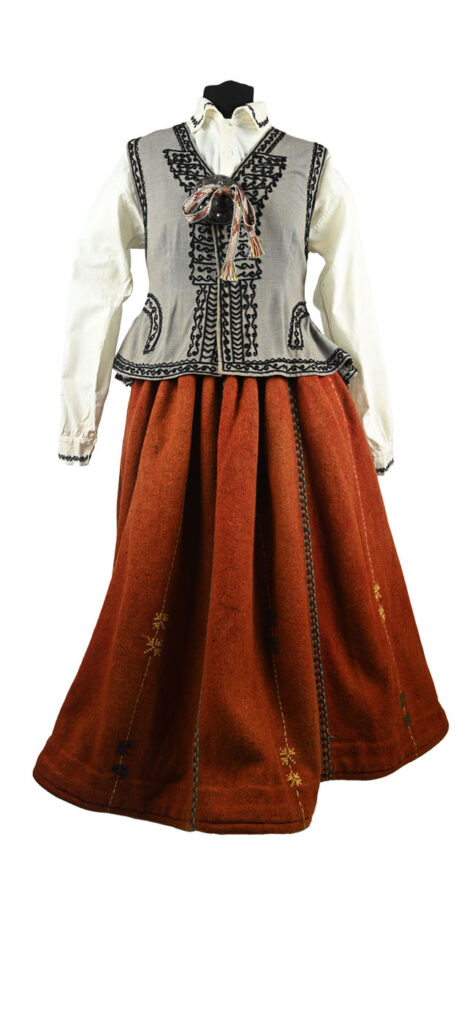
Home > In Refugee Camps > Making folk costumes in refugee camps > A Folk Costume That Met Eleanor Roosevelt A Folk Costume That Met Eleanor Roosevelt Nīca folk costume. Made by Anna Krūmkalns (1911–2000) in the late 1940s, in Poland and Germany. The folk costume was made by Anna Krūmkalns for her daughter Dzintra when they lived in several refugee camps in Poland and Germany. Anna was a seamstress, and her daughter Dzintra also did some of the embroidery. The brooches were made smaller and plainer than the authentic standard because of a shortage of silver. Dzintra wore the Nīca folk costume at Latvian song festivals and various Latvian social events – including one in 1951, when Latvian scouts and girl guides met with the UN representative and human rights advocate Eleanor Roosevelt, the former First Lady of the United States. Donated by Daina Paupe Henry, from the collection of the Latvians Abroad Museum and Research Centre (LP2018.2256). Musical ensemble in a refugee camp in Meerbeck, Germany, 1948. Donated by Biruta Schultz. From the collection of the Latvians Abroad Museum and Research Centre.
A Skirt Made From Curtains Bartered in Exchange for Food
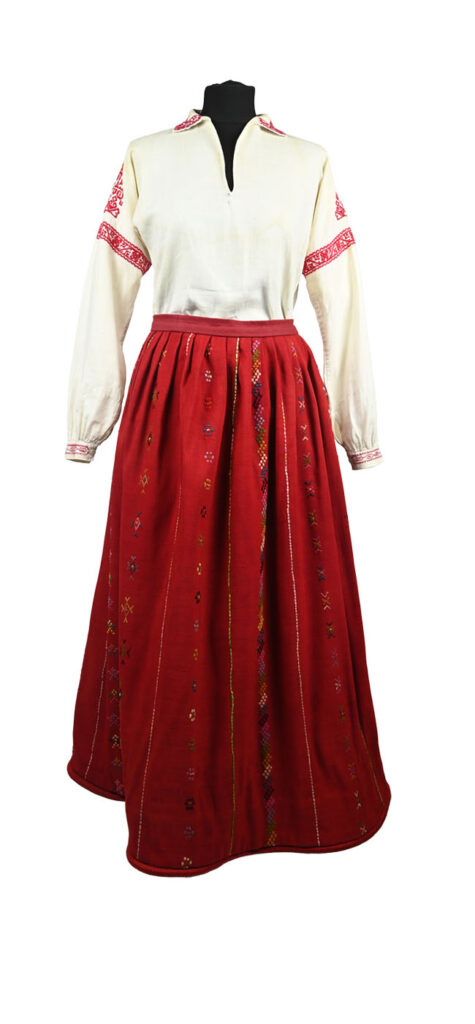
Home > In Refugee Camps > Making folk costumes in refugee camps > A Skirt Made From Curtains Bartered in Exchange for Food A Skirt Made From Curtains Bartered in Exchange for Food Nīca folk costume. Made by Paulīne Bauke (née Silkalns, 1893–1991) in the late 1940s, in Germany. Paulīne Bauke used window curtains to make the Nīca skirt while in a refugee camp. Paulīne bartered foodstuffs in exchange for the curtains from another Latvian woman who had used the curtains she had brought from Latvia as a wall tapestry in her room in the camp. Being a talented handicrafter, Paulīne found yarn and thread with which to make the skirt and shirt as ethnographically correct as she could. When the folk costume was finished, Paulīne’s daughter Ināra wore it to various events held at the Latvian school in the refugee camp. Later, when Ināra and her mother emigrated to New Zealand, the folk costume was worn at various Latvian events. When Ināra moved to Chicago ten years later, she wore the folk costume for many years as a member of the “Dzelme” folk dance group and the “Dzimtene” Latvian mixed choir in Milwaukee. The folk costume has been worn to many Latvian song festivals in America (Boston, Cleveland, Indianapolis, Portland, Milwaukee), Canada (Toronto) and Latvia, when Ināra took part in the Song and Dance Festival Parade and Grand Finale Concert in Riga in 1998. Donated by Ināra Bauke-Krūmiņa, from the collection of the Latvians Abroad Museum and Research Centre (LP2018.2255). Ināra Bauke in her Nīca folk costume ca. 1951 in Christchurch, New Zealand. Donated by Ināra S. Bauke-Krūmiņa. From the collection of the Latvians Abroad Museum and Research Centre.
A Nīca Skirt Made From a Dyed Blanket
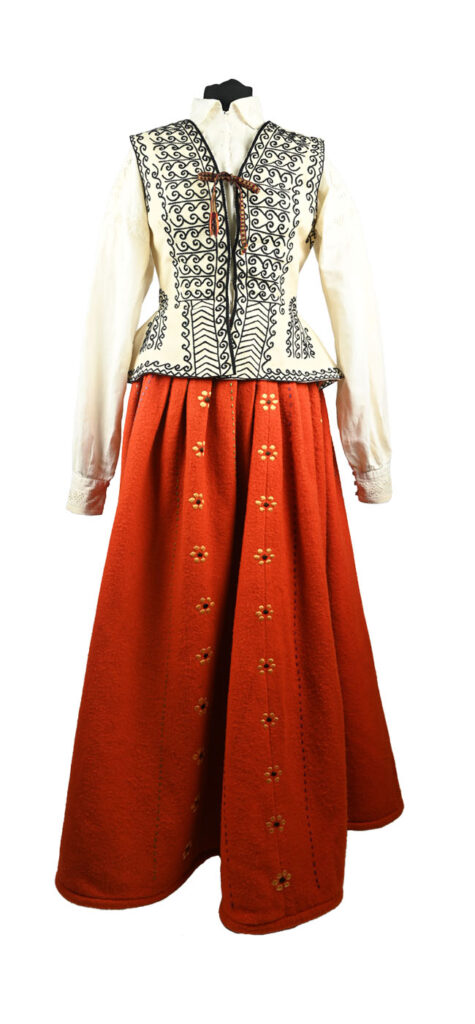
Home > In Refugee Camps > Making folk costumes in refugee camps > A Nīca Skirt Made From a Dyed Blanket A Nīca Skirt Made From a Dyed Blanket Nīca folk costume. Made by Rita Zemītis (née Treija, 1917–1995) in Germany in the late 1940s. Rita Zemītis made the folk costume in the refugee camp in Esslingen, Germany, where refugees could participate in various workshops. At that time it was not possible to make a folk costume from the traditional fabric, so Rita made the Nīca skirt from a bedspread given to her in the camp, which was then dyed to match the traditional colour as closely as possible. Being an avid singer, dancer and speaker, Rita wore her costume to many Latvian social events in exile, as well as to a Song and Dance Festival in Latvia. Donated by Dace Ķezbers (Latvian Folk Art Museum, Chicago), from the collection of the Latvians Abroad Museum and Research Centre (LP2019.2570). At the Memmingen refugee camp, Germany, 1949. Donated by Vija Vilde Mežnora. From the collection of the Latvians Abroad Museum and Research Centre. A Nīca Skirt Made From a Dyed Blanket Playing Previous Song Play Pause Next Song /
A Conductor’s Folk Costume
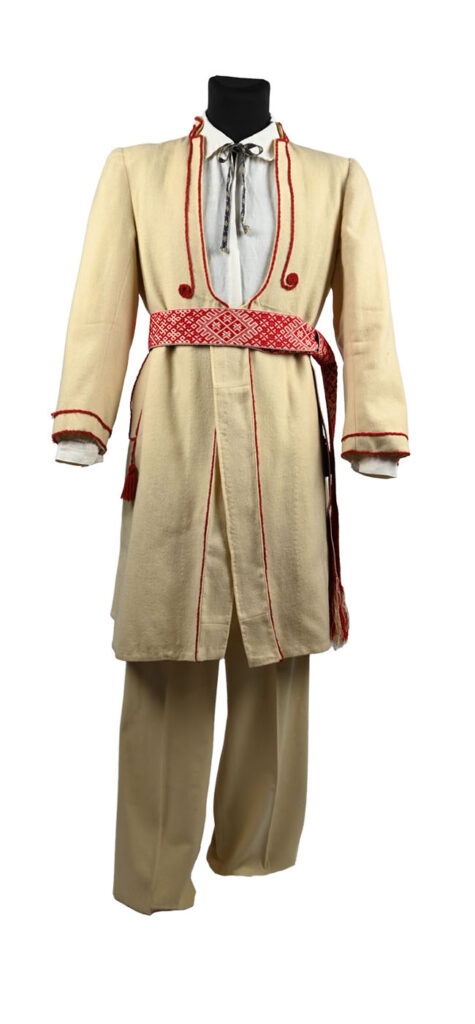
Home > In Refugee Camps > Making folk costumes in refugee camps > A Conductor’s Folk Costume A Conductor’s Folk Costume Northern Vidzeme folk costume. Likely made in a refugee camp in Germany. The folk costume belonged to the singer and conductor Jānis Austrums (1912–2011). Before fleeing Latvia at the end of World War II, Jānis lived with his family in Lielvārde, where he worked as a school principal. His lifelong passion was music, especially singing and conducting. In the Esslingen refugee camp, Jānis was invited to join the “Tēvija” men’s double quartet, which had been founded in Latvia. The singers wore both folk costumes and suits when performing. When the Austrums family emigrated to America in 1949, Jānis continued to sing and conduct the “Līga” Latvian choir in Boston. The “Tēvija” men’s double quartet also continued its activities in America. Jānis Austrums’ folk costume was worn at many “Tēvija” concerts as well as at song festivals in both Europe and North America. Donated by the Voldiņš family, from the collection of the Latvians Abroad Museum and Research Centre (LP2016.111). The “Tēvija” men’s double quartet in the 1940s, in the Esslingen refugee camp; Germany. Jānis Austrums is in the second row, on the right. Donated by Zinta Kūlīte. From the collection of the Latvians Abroad Museum and Research Centre.
Patterns and Designs From the the United States Library of Congress
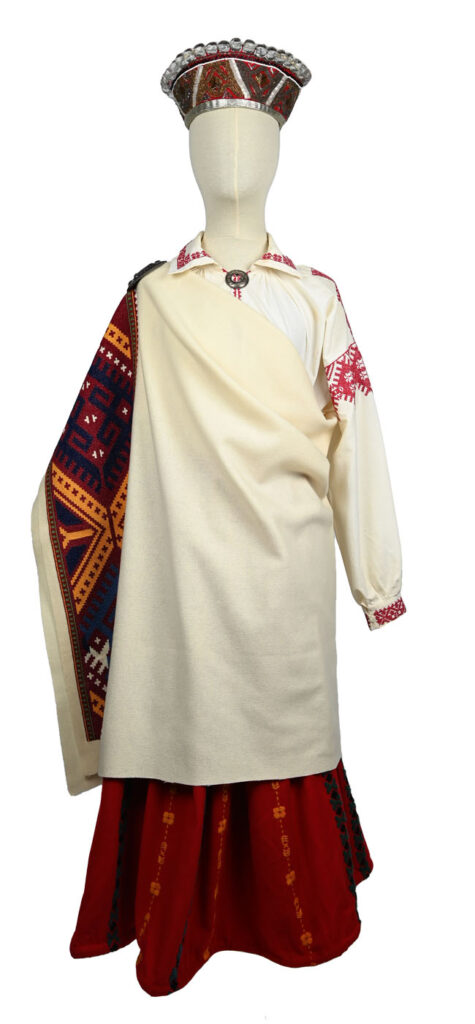
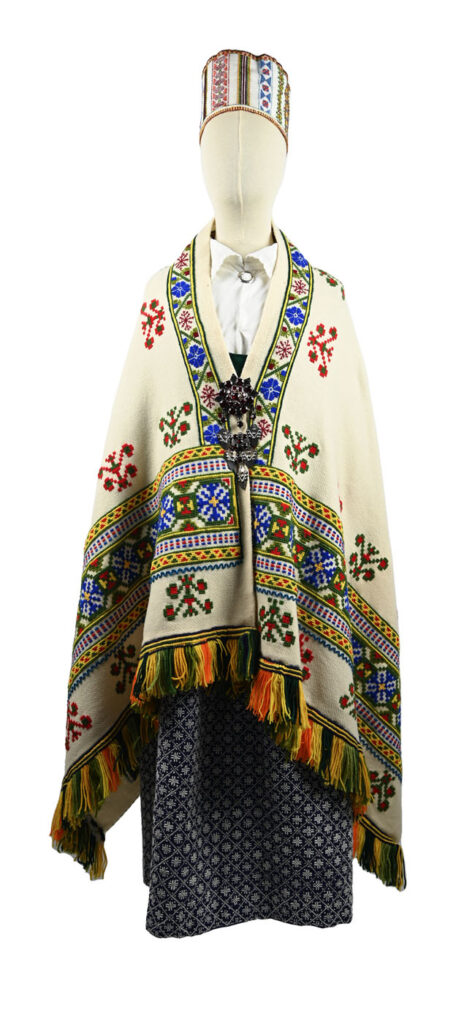
Home > In Exile > Home-made folk costumes > Patterns and Designs From the the United States Library of Congress Patterns and Designs From the the United States Library of Congress Nīca folk costume. Made by Maija Hinkle (née Weinberg, 1937) ca. 1951 in the USA. The folk costume was made by Maija Hinkle, founder of the Latvians Abroad Museum and Research Centre, when she was a teenager and moved with her family from a refugee camp in Germany to Washington, D.C., USA. “I had Latvian ethnography books in front of me from which to copy the designs on graph paper. My mother had already taught me to embroider when we lived in refugee camps in Germany. I bought the fabric in a shop with my mum – the blouse is cotton. The brooches were commissioned in Washington, D.C.” Maija most often wore her national costume when performing with other Latvian youth in a folk dance ensemble in Washington, D.C. Maija states: “The folk costume is a beautiful and profound symbol of Latvian belonging. When I put it on, I felt proud and happy to be Latvian and to be able to show my Latvian identity so visibly. I wore it not only to perform at events, but also on patriotic occasions, such as Latvian Independence Day. It is the only folk costume I have ever owned.” The shawl is unfinished – one end is embroidered and the other is not. This is probably because the chosen Nīca pattern design, although accurate, was redrawn on the fabric and embroidered on a much larger scale than usual. No wonder the teen-aged Maija didn’t have enough time to finish it! Donated by Maija Hinkle. From the collection of the Latvians Abroad Museum and Research Centre (LP2020.95.1). Maija Hinkle and Anda Ūdris are photographed in folk costumes for a newspaper in the 1950s in the USA. From the collection of the Latvians Abroad Museum and Research Centre. Patterns and Designs From the the United States Library of Congress Playing Previous Song Play Pause Next Song /
A Folk Costume for “Sprigulītis” in Australia
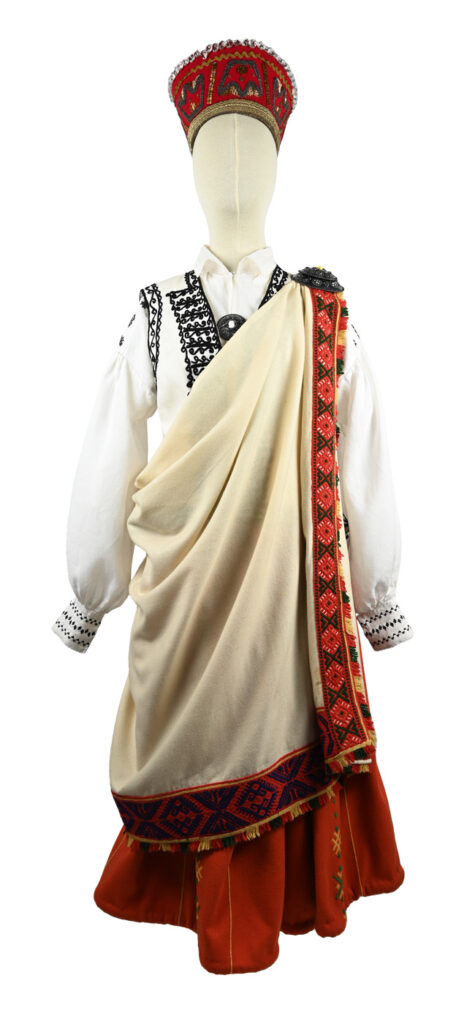
Home > In Exile > Home-made folk costumes > A Folk Costume for “Sprigulītis” in Australia A Folk Costume for “Sprigulītis” in Australia Nīca folk costume. Made by Vita Eversone (née Ruņģe, 1936–2019) in Australia, in 1953. The folk costume was created thanks to the Latvian-Australians’ love of folk dancing. The “Sprigulītis” folk dance group was founded in Canberra in 1953, yet none of the dancers had a folk costume. “No one thought back then that everyone should wear the same kind, but rather – whatever would be easiest! There was no one weaving in Canberra, so we made our own folk costumes. Skaidrīte had Rucava, Inta Skrīvere had Bārta, I had Nīca, Dace Brasla had Abrene, Biruta had Kuldīga.” The shirts of the folk costumes were also embroidered by the participants themselves. At that time, there was nowhere to get the right colour of fabric for the Nīca skirt, so they bought white fabric and dyed it red. Vita also made her own embroidered Nīca shawl: “You couldn’t get the right kind of fabric that could be easily embroidered. So I bought something called ‘baby flannel’. I embroidered a Nīca shawl on it by counting the stitches.” It was not possible to obtain beads for the crown, but one was made, albeit “a sadder one”. Later, Vita made a wife’s cap for her folk costume. Donated by the Eversons family. From the collection of the Latvians Abroad Museum and Research Centre (LP2015.161, LP2023.107). Members of the “Sprigulītis” Canberra Latvian folk dance ensemble at the “Sprigulītis” ball in 1955. Vita Ruņģis, in the centre. Donated by Egons Eversons. From the collection of the Latvians Abroad Museum and Research Centre.
Prauliena Skirt With Embroidered Pattern
Home > In Exile > Home-made folk costumes > Prauliena Skirt With Embroidered Pattern Prauliena Skirt With Embroidered Pattern Prauliena folk costume. Made by Ērika Zosārs (1911–2008) in Melbourne, Australia in the 1960s. The maker of the costume, Ērika Zosārs, was born in Meirāņi and became a refugee at the end of WWII. She lived most of her life in Australia, where she was actively involved in the Latvian community in Melbourne – she took part in Latvian theatre, sang in the “Rota” choir, and was the dining coordinator for the “Sprīdīši” Latvian children’s camp. Ērika made several folk costumes, both for herself and her son Ūve. Ērika wore her self-made Prauliena folk costume at choir concerts and Australian Latvian Arts Festivals. Embroidery was Erika’s hobby – she embroidered the designs not only on shirts and shawls, but also for the skirt of this folk costume! Her son Ūve remembers: “A lot of work went into embroidering this folk costume skirt instead of weaving the pattern into it! She sat and embroidered the skirt in her small apartment. It’s a really fond memory of mine!” Donated by Ūve Zosārs. From the collection of the Latvians Abroad Museum and Research Centre (LP2019.1717-1720). Ērika Zosārs in her Prauliena folk costume at her home in Melbourne, Australia, in the late 1980s. Donated by Ūve Zosārs. From the collection of the Latvians Abroad Museum and Research Centre. Prauliena Skirt With Embroidered Pattern Playing Previous Song Play Pause Next Song /