
A Bride’s Attire
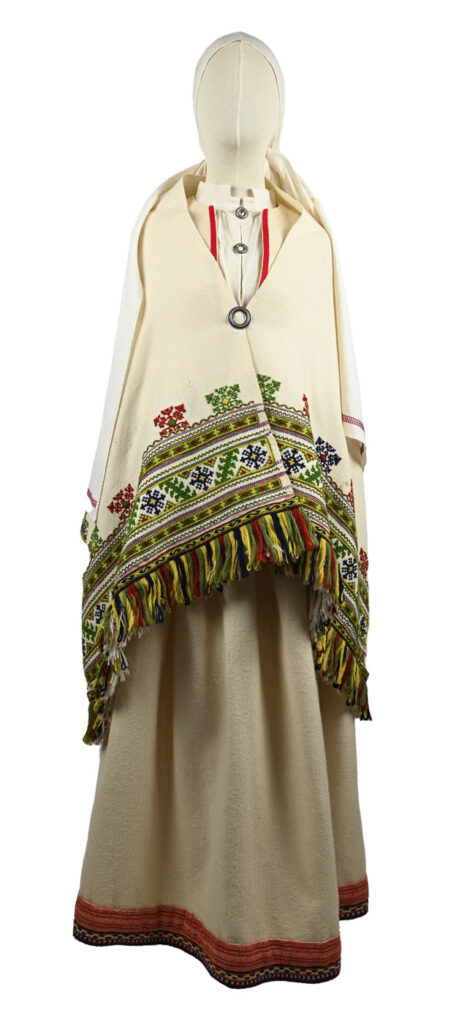
Home > In Exile > Folk costumes – not just for the stage > A Bride’s Attire A Bride’s Attire Abrene folk costume. Made in Latvia, 1991. The Abrene folk costume was made in 1991 in Riga. It was brought to the Latvian Song Festival in Canada by members of the “Rotaļa” dance group from Latvia, with the idea of selling the costume at the festival’s bazaar to raise pocket money to visit relatives. Latvian-Canadian Ingrīda Mazutis decided that one can never have too many folk costumes, and bought it. Laima, one of Ingrīda’s daughters, took a fancy to the Abrene folk costume; she recalls: “I was immediately attracted to it because it was different from other folk costumes – it was white, noble, festive. I also saw it as a silent demonstration against what had been illegally taken from Latvia – the territory of Abrene.” The folk costume was worn at various Latvian community events in Ottawa, Canada. Laima wore the Abrene folk costume when marrying her husband, Uldis Dimiševskis. When Laima moved to Latvia in 2005, the Abrene folk costume had found its way back to Latvia. “The next very meaningful event that I wore this folk costume to was when I took part in the Latvian Song and Dance Festival in 2013. It was a great feeling to stand on the Mežaparks stage in my Abrene folk costume – I felt I belonged, and it was a great, festive feeling!” On loan from Laima Dimiševska. Laima and Uldis Dimiševskis in folk costumes on their wedding day at the Canadian Latvian estate “Tērvete” on 10 October 1998, Grenville-sur-la-Rouge, Quebec, Canada. Donated by Laima Dimiševska. From the collection of the Latvians Abroad Museum and Research Centre.
Lost Folk Costumes Found Through Facebook

Home > In Exile > Handed-down folk costumes > Lost Folk Costumes Found Through Facebook Lost Folk Costumes Found Through Facebook Man’s folk costume. Made by Zigrīda Gaujeniece in New York, USA in the 1960s. The folk costume once belonged to Alfreds Gaujenieks. It was made by his wife Zigrīda, who took inspiration from the drawings of J. Brotze. Alfreds and Zigrīda were for many years Latvian Scout leaders in the USA, as well as leaders of the “Trejdeksnis” Latvian folk dance group in New York. Zigrīda Gaujeniece had a rich collection of Latvian folk costume books, which she used as sources of information. The folk costume used to have brass buttons made by Alfreds himself; the folk costume was also shown as an ethnographic specimen at the 1996 folk costume exhibition in Washington DC. Alfred was often seen wearing his folk costume in Latvian society, which inspired others – for example, the Latvian youth Mārtiņs Putenis made a similar folk costume for his wedding. Zigrīda also made folk costumes for herself and her sons Mārtiņš and Gatis. When the boys grew up, the folk costumes were loaned to others, and over the years they were passed from one dancer to another. Now living in Latvia and having sons of his own, Gatis Gaujenieks decided to find the folk costumes made by his mother via Facebook. The search was successful, and the costumes are back in the Gaujenieks family! On loan from Gatis Gaujenieks. Alfrēds and Zigrīda participating in the parade at the Song Days in Gotland, Sweden in 1979. Donated by Gatis Gaujenieks. From the collection of the Latvians Abroad Museum and Research Centre.
A Folk Costume Inherited From an Aunt
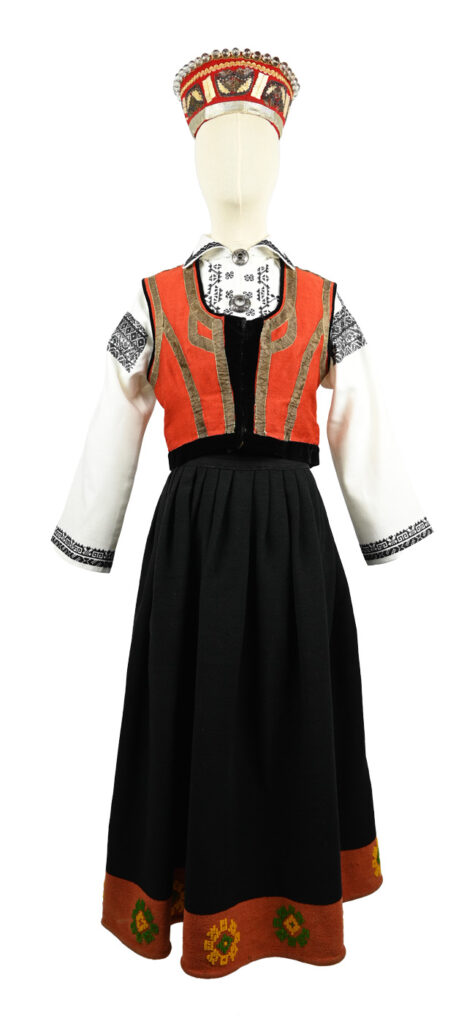
Home > In Exile > Handed-down folk costumes > A Folk Costume Inherited From an Aunt A Folk Costume Inherited From an Aunt Bārta folk costume. Made by Anna Trops (1912–1958) in Latvia, 1930s. Making the Bārta folk costume was Anna Trops’ graduation project at the Višķi State School of Horticulture and Home Economics in the 1930s. The Trops family took it with them when fleeing Latvia at the end of WWII. Anna Trops wore her self-made folk costume while singing in the refugee camp choir in Neuötting, Germany, and later, in the US, in the Detroit Latvian Choir. After Anna’s death in 1958, the folk costume was inherited by her brother’s daughter Valentīna Pradenas (née Trops). The folk costume was often worn when performing with the Latvian choir in Detroit, later with the choir led by Bruno Skulte in New York, as well as with the kokle ensemble led by Andrejs Jansons. Valentīna also wore the national costume to political demonstrations demanding the restoration of Latvia’s independence. As the shirt had become very threadbare over the years, Valentīna made a new shirt by copying the old one. Valentīna bought the brooches in America. Donated by Valentīna Pradenas. From the collection of the Latvians Abroad Museum and Research Centre (LP2014.116). Anna Trops in the Bārta folk costume in the 1930s. Donated by Valentīna Pradenas. From the collection of the Latvians Abroad Museum and Research Centre.
Award-winning Archaeological Reconstruction of a Costume
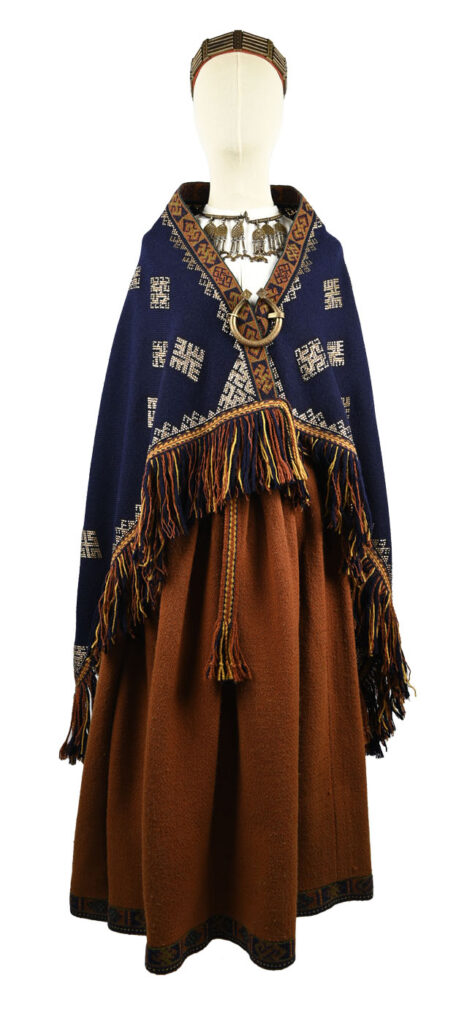
Home > In Exile > Becoming a master folk costume maker > Award-winning Archaeological Reconstruction of a Costume Award-winning Archaeological Reconstruction of a Costume Archaeological reconstruction of a costume excavated in Stāmeriena. Made by Lilija Balgalve-Treimane and Toronto artisans in Canada in 1976. This archaeological reconstruction of a costume excavated in Stāmeriena was made by Lilija Balgalve-Treimane, an outstanding master folk art artisan, member of the Latvian Arts and Crafts Association in Canada, and author of the book “Celaines. Celu jostu un apaudu aušana”, [Tablet weaving: belts and trims]. The reconstruction of the ancient Latgalian costume was created for the applied arts exhibition at the 6th Latvian Song Festival in Canada in 1976. Preparatory work for making the costume was lengthy and included information gathering, sketching, and consulting with Aleksandra Dzērvīte. The shawl is based on archaeological materials obtained during the excavation of a Late Iron Age barrow on the shore of Lake Ludza in Stāmeriena Parish in 1898. Several people helped in the making of the costume: Rita Auziņa made the cloth for the skirt and shawl, and metalsmiths Oskars Grīns, Kārlis Grencions and Juris Kļaviņš made the metal jewellery and ornamentation. Lilija herself incorporated the bronze rings into the shawl and wove the trims. Lilija received several awards for her masterpiece – a certificate of recognition and an award from the Organising Committee of the 6th Latvian Song Festival in Canada, as well as a certificate of recognition from the Cultural Foundation of the World Federation of Free Latvians. The costume was later exhibited in several Latvian booths at ethnic folk festivals in North America. On loan from Lilija Balgalve-Treimane. Lilija Balgalve-Treimane in her Stāmeriena costume in Canada in the 1970s. Donated by Lilija Balgalve-Treimane. From the collection of the Latvians Abroad Museum and Research Centre.
Splendour From Plant Dyes
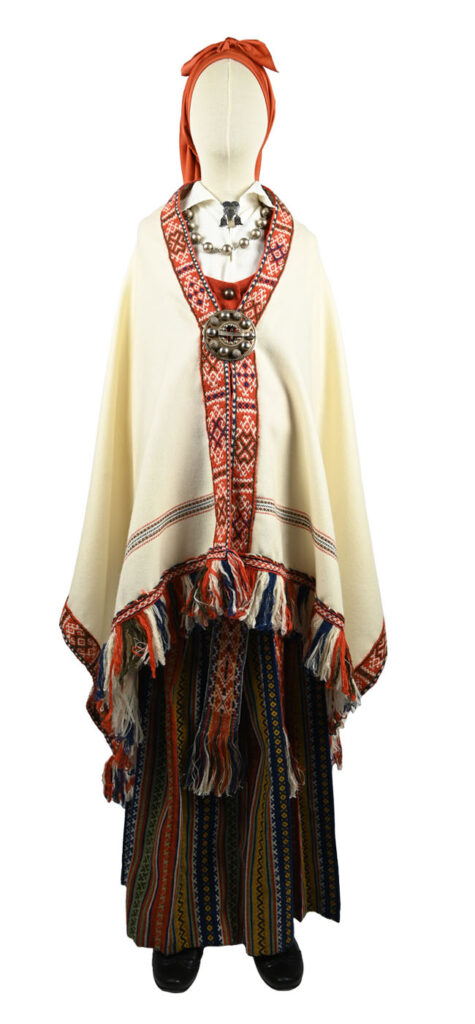
Home > In Exile > Becoming a master folk costume maker > Splendour From Plant Dyes Splendour From Plant Dyes Zemgale folk costume. Made by Valija Bērziņa (1916–2012) and Alise Stepaneka (1916–2002) in Germany, 1980s. The Zemgale folk costume was made in Germany and once belonged to Līga Morusa. She entrusted the making of the folk costume to craftswomen. Valija Bērziņa, an experienced handicrafter in Würzburg, dyed the woolen threads with plant dyes and wove the cloth for the skirt. Alise Stepanek in Munich embroidered the folk costume’s shirt, wove the belt, and made the shawl. Līga wore the costume when performing with the Munich-based ensembles “Atvasara” and “Kas tie tādi”. After moving to Latvia, Līga often lent the folk costume to singer Zane Šmite to wear at concerts, song festivals, the “Baltica” folklore festival, and elsewhere. Several years ago, Līga gifted the Zemgale folk costume to Zane. When Zane Šmite performs in this folk costume, “everyone comes up to touch it because it is insanely beautiful!” On loan from Zane Šmite. Līga Morusa (on right) in her Zemgale folk costume celebrating Midsummer’s Eve in Latvia in 1999. In private collection of Līga Morusa. Splendour From Plant Dyes Playing Previous Song Play Pause Next Song /
An Exemplary Wedding Costume
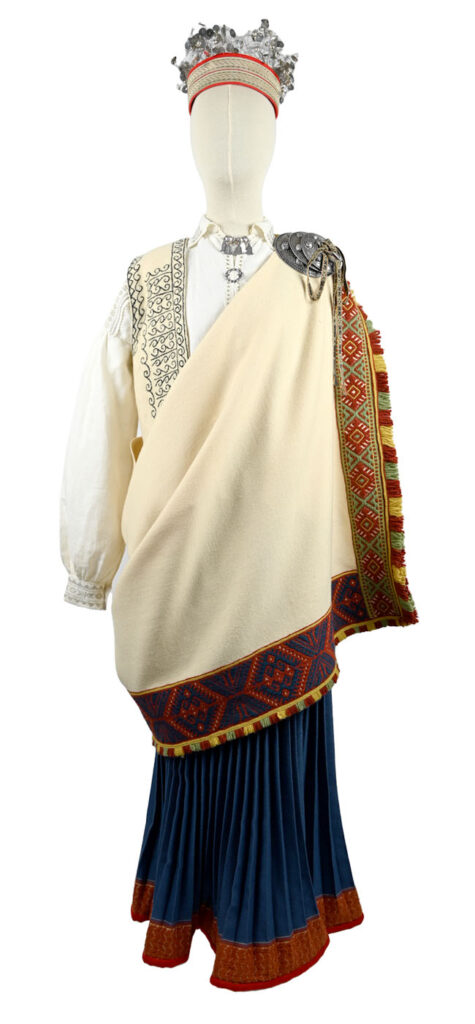
Home > In Exile > Becoming a master folk costume maker > An Exemplary Wedding Costume An Exemplary Wedding Costume Nīca folk costume. Made by Erna Puriņa-Jansone (1920–2017), USA, 1960s. The folk costume is a replica of an 18th-century Nīca bridal costume. It was made by the skilled craftswoman Erna Puriņa-Jansone, who had graduated from the Liepāja School of Applied Arts in Latvia. In 2015 Erna Puriņa-Jansone prepared and published the book “Sienas segu un spilvenu meti latviskā stilā / Latvian Style Wall Hangings and Pillow Designs”. The beautiful and unusual bridal costume from Nīca has taken part in several folk costume shows at Latvian Song Festivals in Milwaukee and Chicago, where in 2002 it was featured as the show’s closer. Donated by Māra Blats. From the collection of the Latvians Abroad Museum and Research Centre (LP2023.109). A model wearing the folk costume made by Erna Puriņa-Jansone, the Latvian Song Festival in Chicago, 2002. A still from the video of the show, filmed by LATTV, a Latvian video studio in Canada.
A Folk Costume Made by a Master Tailor
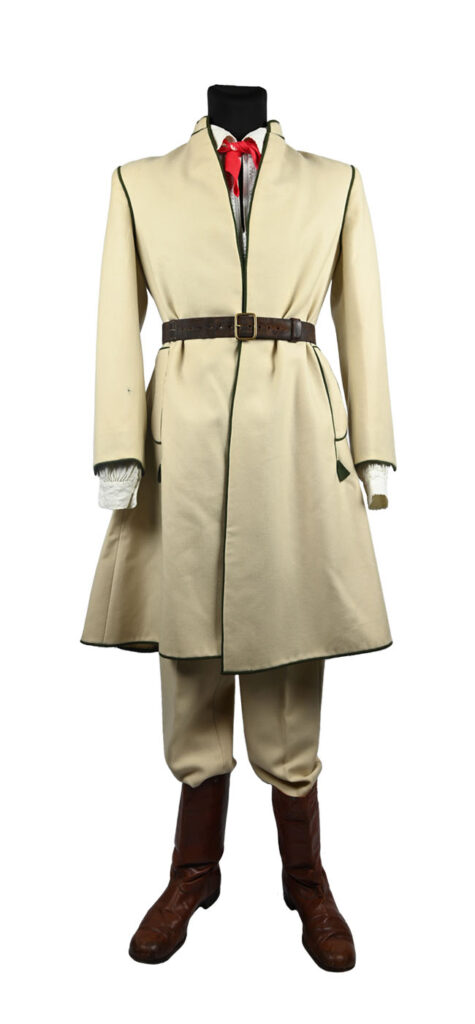
Home > In Exile > Becoming a master folk costume maker > A Folk Costume Made by a Master Tailor A Folk Costume Made by a Master Tailor Kuldīga man’s folk costume. Made by Rasma Spalvainis and Bruno Sauls in 1959, UK. The folk costume was made for the Latvian folk dance group “Līga” in Cardiff, Wales, by Leeds-based master tailor Bruno Sauls. Sauls modelled the folk costume on those in the book “Novadu tērpi” [Regional folk costumes] by E. Kivicka and A. Karnups. Sauls travelled all the way to Cardiff to take the measurements of every dancer in order to ensure well-fitting folk costumes. The shirt for this folk costume was sewn by handicrafter Rasma Spalvainis. Donated by the “Senā Klēts” Folk Costume Centre. From the collection of the Latvians Abroad Museum and Research Centre (LP2018.1580). The Cardiff-based Latvian folk dance group “Līga” at a folk festival in Cork, Ireland in 1961. The dancers are wearing Kuldīga folk costumes made by tailor Bruno Sauls. Donated by Rita Jefimova. From the collection of the Latvians Abroad Museum and Research Centre.
Homemade Jewellery From Copper
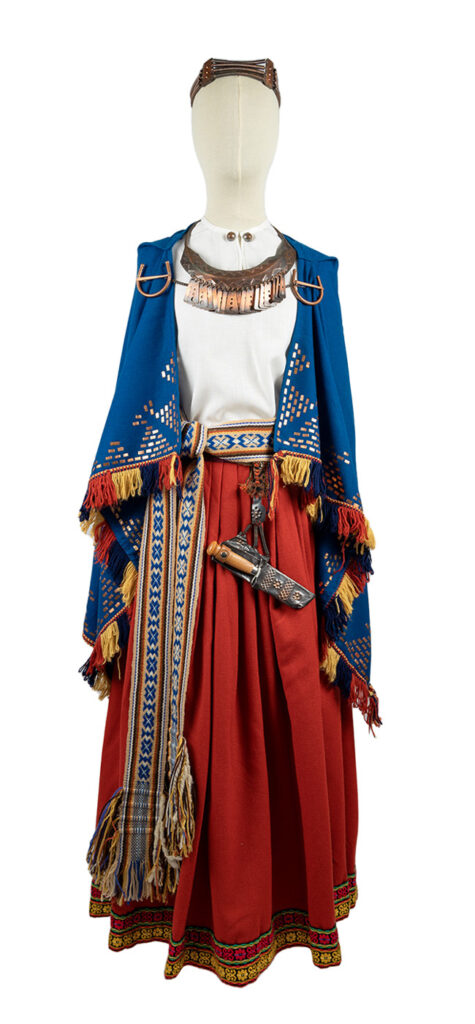
Home > In Exile > Becoming a master folk costume maker > Folk costumes made by folk dance groups >Homemade Jewellery From Copper Homemade Jewellery From Copper Reproduction of an archaeological costume. Made in Canberra, Australia, in the 1970s. This reproduction of a 12th-century costume was made by members of the “Sprigulītis” folk dance ensemble in Canberra. In the run-up to the opening of the Sydney Opera House, various ethnic groups living in Australia were invited to enter a competition to perform at this historic event. Māra Siksna recalls: “Knowing that we would be competing with the lively dancers of the southern nations, and the sumptuous silk and gold costumes of the eastern countries, director Skaidrīte Darius decided to highlight the long history of our dances and rituals. So was born the reckless idea of imitating a 12th-century Latgalian costume for four pairs of dancers.”The archaeological costume reproductions and jewellery were made by the dancers themselves in the dining room of Māra’s house, using the more readily available copper instead of bronze. For example, the copper for the bracelets came from car batteries, while the penannular brooches were made from copper pipes bought from a plumbing shop. The costumes were made by learning and mastering new metalworking and handicraft techniques, as well as adapting them to the needs of the stage. This costume has been worn on many stages, including on the “Saules josta” folk dance ensemble’s tour to America, Canada, England, Germany and Sweden in 1976. Donated by Māra Siksna and Skaidrīte Darius. From the collection of the Latvians Abroad Museum and Research Centre (LP2023.6.9-12, LP2023.112). Siksna family in Canberra, Australia, 1973. Donated by Māra Siksna. From the collection of the Latvians Abroad Museum and Research Centre. Homemade Jewellery From Copper Playing Previous Song Play Pause Next Song /
Parts From a Water Boiler old
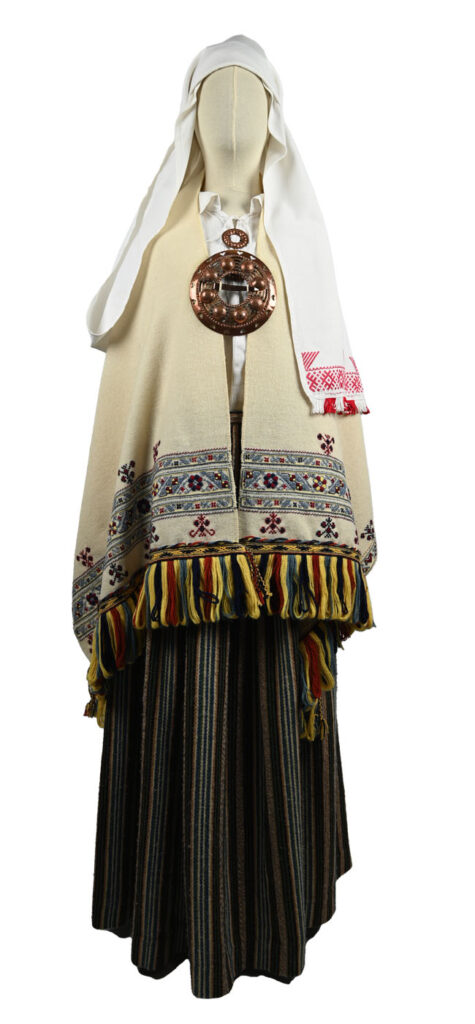
Parts From a Water Boiler Dignāja folk costume. Made by Rita Jefimova around 1980 in Great Britain. The Dignāja folk costume was made in the Latvian arts and craft group in Leeds in preparation for the English Latvian song days. Rita Jefimova made not only the Dignāja skirt, shirt, shawl and head-wrap, but also the brooches – they were made from copper water boiler parts. Rita remembers: “The craziest part was when we had to weave the skirt because we couldn’t get the right materials. I have a Dignāja skirt that I can hardly wear because it is so thick and heavy. I turned out more like upholstery fabric – we wove with what we had.” Donated by Rita Jefimova. From the collection of the Latvians Abroad Museum (LP2016.340). Rita Jefimova in the Dignāja folk costume in the estate garden of the Latvian centre “Abrene” in France; Easter 1990. Donated by Rita Jefimova. Parts From a Water Boiler Playing Previous Song Play Pause Next Song /
Collaborative Work by Master Artisans
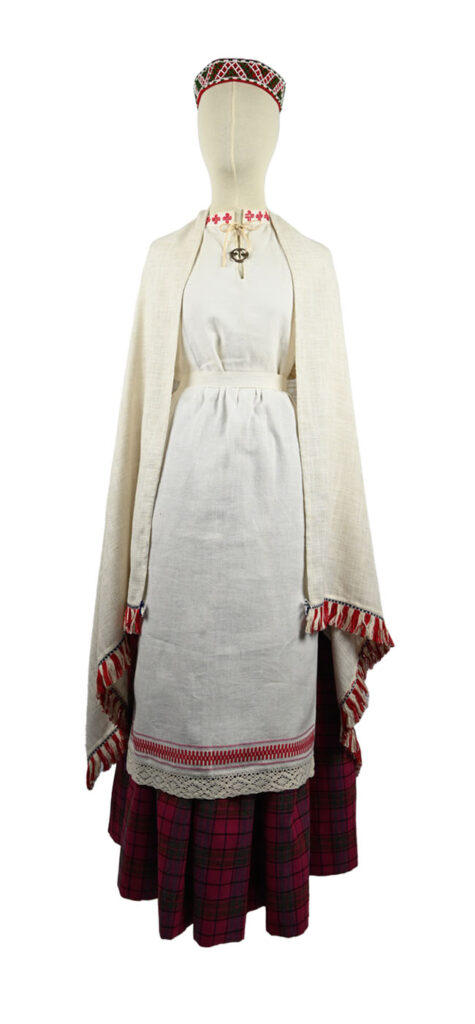
Home > In Exile > Becoming a master folk costume maker > Latvian Arts and Crafts Group in Leeds > Collaborative Work by Master Artisans Collaborative Work by Master Artisans Mērdzene folk costume. Made by Ērika Vīlipsone and Ilga Mieriņa in 1972, in the UK. This northern Latgale folk costume is the joint work of two members of the Latvian arts and craft group in Leeds. The fabric for the skirt was bought in a fabric shop in England. Ērika Vīlipsone, who wore the folk costume, made the shirt and maiden’s headdress; Ilga Mieriņa made the woven belt, the matron’s headdress pieces, and the apron and socks. The silver brooch was made by Margonis Bude. Donated by the “Senā Klēts” Folk Costume Centre. From the collection of the Latvians Abroad Museum and Research Centre (LP2018.1572). Ilga Mieriņa (left) and Ērika Vīlipsone and of the Latvian arts and craft group in Leeds; 1989. Donated by Rita Jefimova. From the collection of the Latvians Abroad Museum and Research Centre.